Frequently Asked Questions
I’ve bought a Fresha Voucher but the link isn’t working – how can I redeem?
Please note that the Fresha system is no longer being used from 31st October as we upgrade and amalgamate our booking software. If you have purchased a voucher then please contact me directly regarding a transfer towards a different future service – you can email me at neural.rhythms.uk@gmail.com for further information.
What is SoundBath Therapy?
Sound Therapy uses sound, music and specialist instruments played in therapeutic ways, combined with deep self-reflection techniques to improve health and wellbeing.
How does it work?
The therapeutic sound and sound therapy techniques are delivered by Neural Rhythms using tonal and rhythmic instruments, together with carefully considered therapeutic sound techniques which have been shown to affect physiology, neurology and psychology, ending with a form of reflective enquiry.
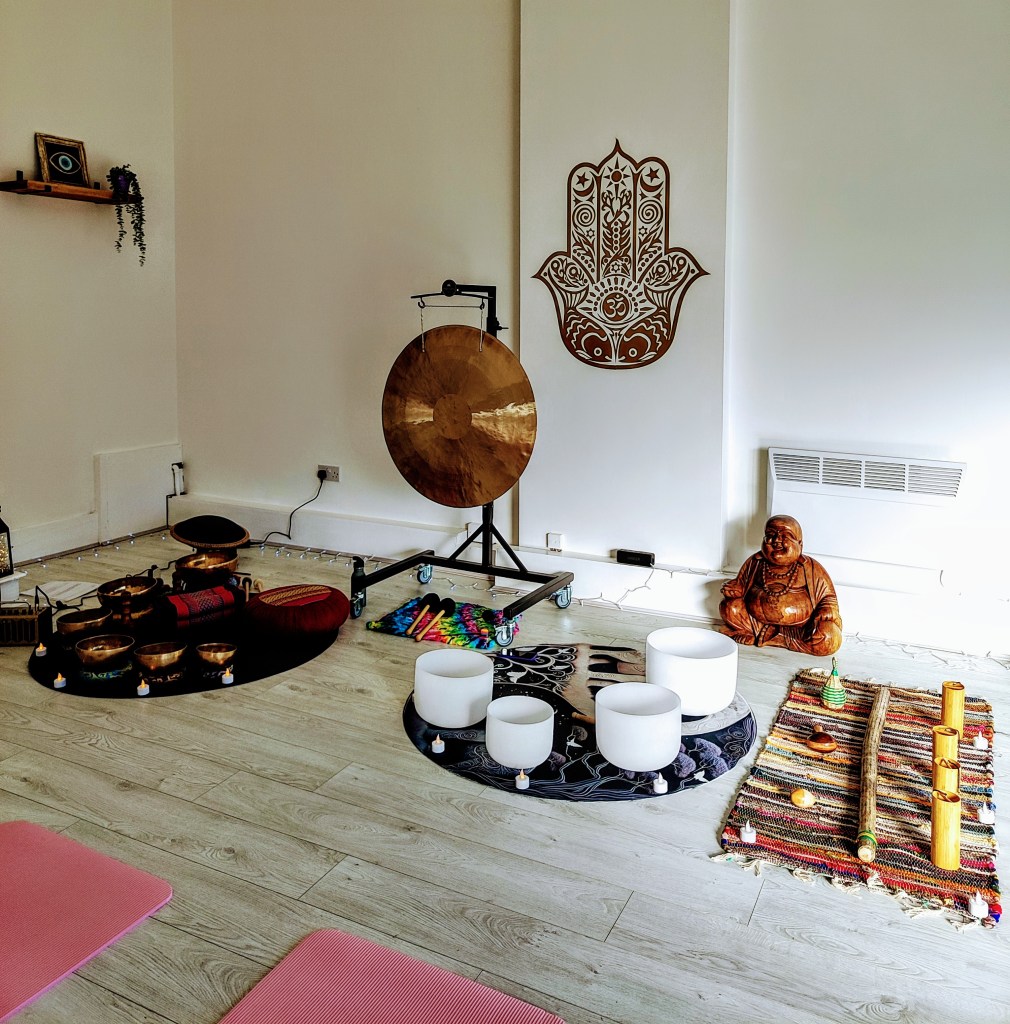
The tonal instruments used are a combination of Himalayan and Crystal Singing Bowls and/or Gong, with therapeutic rhythm percussion sessions given using rainsticks, shakers, chimes and other percussion delivered in a specific order to maximise the therapeutic process.
What can SoundBath Therapy do for me?
The benefits of Sound Therapy include:
- Helps clear energetic blockages
- Reduces stress and anxiety
- Can help improve circulation
- Helps soothe nervous system
- Increases clarity and focus
- Enhances spiritual connection
- Helps with pain management
- Boots immune system
- Supports emotional and mental well-being
- Improves sleep
Is it Meditation?
Whilst not known as a meditation in the traditional sense, a Sound Bath experience can be very helpful for anyone who wants to access the benefits of meditation or relaxation. Whilst traditional meditative practices requires you to have a point of focus or perhaps recite a mantra or using breathwork, all you have to do during a Sound Bath is lie back and listen.
Soundbaths help individuals have an awareness of the here and now, connected you to the present moment and allowing one to explore mindfulness. Therefore this can be beneficial for both beginner or experienced meditators.
What’s the science?
Information gathered by BAST over the last 20 years has informed them that certain instruments seem to affect a person in different ways. This information is then used by a BAST trained therapist to create a treatment specific to their client’s symptomatic state and their intention for the treatment – i.e. a relaxing treatment would be very different from an energising treatment. If a client had muscle tension Himalayan bowls may be played in a specific way – whereas if a client was in chronic pain a gong or crystal bowl may be used. The BAST method specialises in combining instruments in a specific way to influence brainwave frequencies, enabling a person to enter an altered state of consciousness (ASC) similar to very deep relaxation or meditation. In this state many different therapeutic process’ can occur.
Who shouldn’t attend a Soundbath Session?
As health and wellbeing is of the utmost priority for Neural Rhythms, unfortunately due to the nature of Sound baths and frequency treatments with the possibility of entering ASC (Altered State of Consciousness), we are unable to perform treatment for anyone who is:
1st trimester of pregnancy
It is believed that there are many positive and beneficial effects to be gained from relaxation and healing sounds to the growing foetus. The advised healing practice is gentle flowing sounds around the pregnant mother for the beneficial and positive effect of both mother and baby. However, Sound Therapy is not advised when less than 12 weeks pregnant, which is a standard in therapeutic practices.
Individuals suffering from severe mental health challenges such as schizophrenia, bipolar disorder or severe clinical depression.
Given that this particular method of Sound Therapy can induce participants into an altered state of consciousness, it is not suitable for people with severe or clinical mental health conditions that affect your perceptions or sense with delusions or hallucinations such as schizophrenia or mood disorders.
Sound induced epilepsy
According to the Epilepsy Action support services there is a rare form of epilepsy, where music or sound can trigger an epileptic seizure. The sound is usually very unique to the person who will usually be aware of their own triggers. Sound therapy is not suitable for people with sound-induced epilepsy.
It is also advisable that those who have pacemakers, cochlear implants, or certain types of metal implants to seek medical advice from their GP/Consultant as in rare instances the sound vibrations can set up what is known as ‘sympathetic resonance’ with the possibility of causing discomfort in the implant or even disrupt its function. It is advisable that this information is provided on booking so we can help you make an informed decision and for you to seek advice from a medical professional if concerned.
Can a SoundBath help me sleep?
Research under taken by Somnus X Sleep found that therapeutic music is proven to improve sleep by up to 45%
Sleep-related difficulties problems affect over 50% of people worldwide. In some countries people get less than 5 hours sleep a night. Getting a poor night’s sleep affects all areas of your life, work and relationships as well as your mental and physical health and wellbeing. A research programme was conducted at The British Academy of Sound Therapy to discover:
- More about the quality and duration of people’s sleep
- How their sleep affected their life, health and wellbeing
- Whether a music programme designed specifically to enhance sleep was effective
- If so in what ways?
41% of participants felt they definitely had a sleep problem, 45% sometimes had a sleep problem and 14% felt they did not have a sleep problem but were still kept in the study. The findings showed that the difficulties decreased by the end of the study. Interestingly some of the categories seemed to increase post-test but this was due to participants selecting ‘slightly’ as opposed to ‘severely’ with sleep difficulties, for example. The results were very encouraging.
What should I wear/bring to a SoundBath?
We would recommend for participants to dress comfortably – maybe even layers depending on the location and/or time of year. Bring a mat to lie on (unless specifically provided within a session), a pillow to rest your head, a small blanket to cover your body/feet, an eye mask or anything else that will help you feel more comfortable. Hydration is key so please also bring some water with you to have before and after the session.
It is recommended that you eat a small light meal pre and post a therapeutic session to ensure maximum comfort, and in addition, we would recommend that you also look to avoid alcohol and/or recreational drugs before and after attending.
How did you learn Sound Therapy?
I trained at The British Academy of Sound Therapy (‘BAST’) and undertook their Professional Diploma in Group Sound Relaxation Therapy (Dip. GRST (BAST), qualifying with a distinction. This consisted of a mixture of online and face to face learning, with plenty of research pods and zoom classes with tutors to stay fully aligned. The reason for choosing BAST over other providers was the support of ongoing scientific research within the sound therapy field, together with the fact the qualification would be recognised by professional therapeutic bodies. This would ensure I became a fully accredited and insured Therapist in order to provide peace of mind and professionalism to potential clients.
Can’t anybody buy and play these?! What’s the difference with you?!
Yes, you are absolutely right! It’s great that Sound Therapy instruments and percussion are available to all… but on the other hand, if you don’t know what you are doing you could cause more harm than good!
Instruments such as Himalayan Singing Bowls (formerly known as Tibetan Bowls) are easily accessible and do make it a great entry level tool into the world of personal sound therapy. These can assist in self-meditations or helping to ground you. But to really get the full benefits of therapeutic sound can take skill – ensuring sessions are structured in certain ways according to the desired outcome (relaxation/energising/etc), making sure instruments are not being played over a certain decibel level, checking that participants are fully grounded before leaving sessions, ensuring contraindications and awareness are known prior to sessions… and the list goes on!
It is important to know that currently in the UK, there is no official governing body for Sound Therapy/Healing to maintain standards of best practice and ethics. There are many programs on the market, and plenty on social media, offering classes/workshops and ‘training programs’ without any real validity or knowledge, nor practice of self-reflection techniques should someone enter process through emotions such as trauma.
Neural Rhythms is a member of the International Therapeutic Sound Association, fully insured and emergency first aid trained – and having trained with The British Academy of Sound Therapy (‘BAST’), their method ensures that practitioners are fully supported pre and post qualification in helping individuals should they require further signposting from process.
 Neural Rhythms